
In this article:
- A mug of cocoa, rebuilt as a cookie
- Three chocolates, one dough
- Why marshmallows vanish, and how these do not
- What goes into the cookies
- Mix, chill, scoop, toast
- Freeze the dough, bake on demand
- Flat cookies and pale tops, fixed
- Peppermint, orange and double marshmallow variations
- Hot chocolate cookie questions, answered
Hot chocolate cookies take the whole mug seriously: a deep cocoa dough with the milky sweetness of cocoa mix, chocolate chips that stay melty at the edges, and marshmallow in two places, folded through the dough and toasted on top.
Most versions choose one marshmallow strategy and accept its weakness. Bits inside disappear, halves on top slide or scorch, and the cookie that looked like a mug of cocoa in the photograph eats like a plain chocolate cookie with a pale spot.
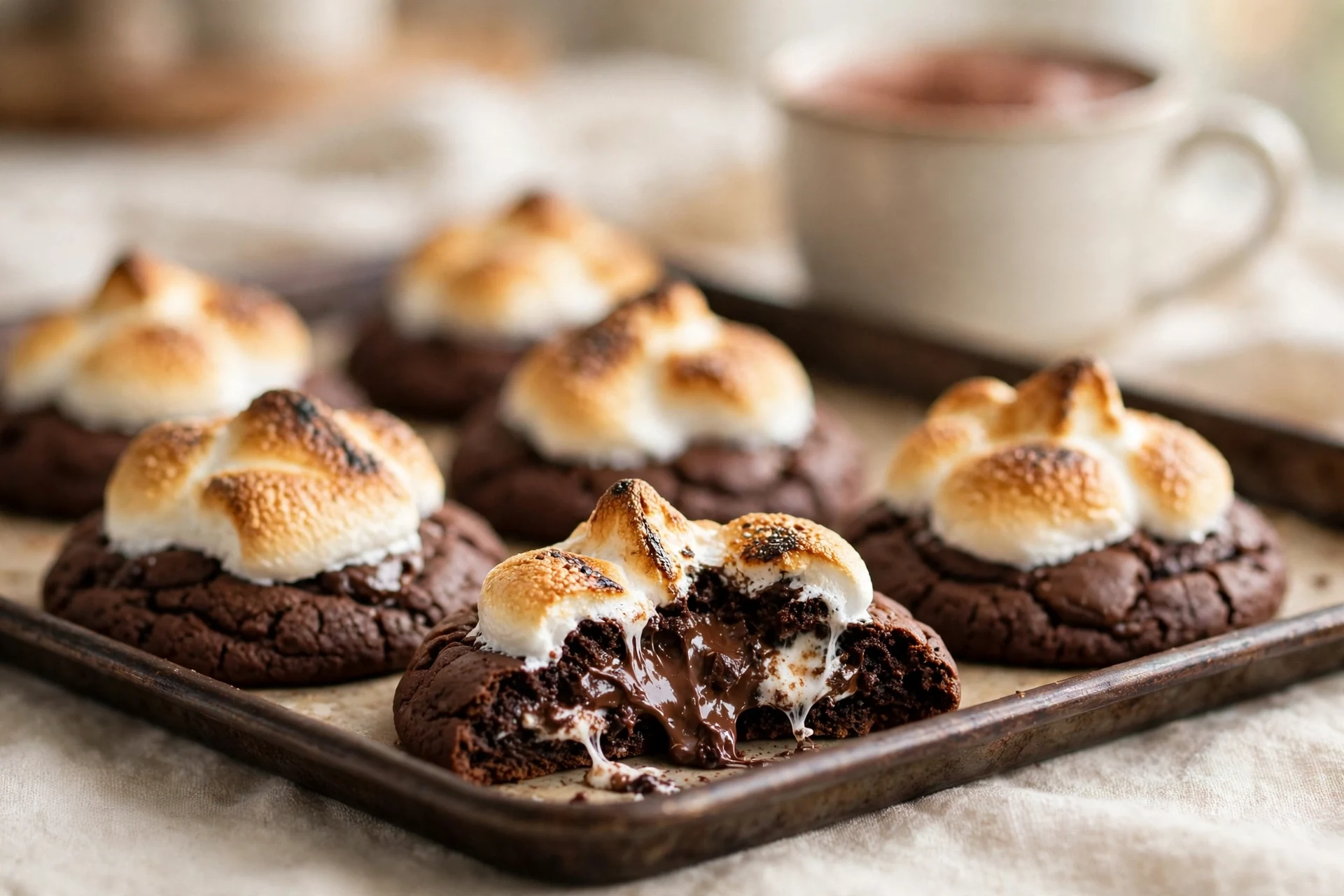
This recipe uses both placements, each for what it does best. Freeze dried marshmallow bits survive the bake inside the dough, and a fresh marshmallow half goes on for the last two minutes, just long enough to puff, slump and toast.
A Mug of Cocoa, Rebuilt as a Cookie
Hot chocolate cookies work when the dough itself tastes like the drink, before any topping appears. That flavor has three parts: real cocoa for depth, cocoa mix for the familiar sweetness, and milk powder for the creamy note that separates cocoa from a plain chocolate cookie.
The cocoa here is Dutch process, which bakes darker and smoother than natural cocoa and gives the crumb its almost black color. Against it, the sweetened cocoa mix does quieter work than people expect: it rounds the bitterness and adds the nostalgic flavor everyone recognizes.
Melted butter is the texture decision. It makes a chewier, denser cookie than creamed butter, with edges that set and centers that stay soft for days. The extra egg yolk adds richness without making the dough cakey.
A short chill, thirty minutes, is not optional decoration. Melted butter dough spreads too fast when warm, and the chill is the difference between a thick, chewy cookie and a thin, crisp one. Both are good; only one tastes like the mug.
The result is a cookie box cookie in the truest sense: sturdy enough to stack with parchment between the layers, pretty enough to sit on top of the box, and better on day two than in the first hour.
Three Chocolates, One Dough
The first chocolate is the Dutch cocoa in the dough, and it sets the tone: dark, smooth, not bitter. Sift it with the flour if it is lumpy, because cocoa lumps do not break up once the dough comes together.
The second is the cocoa mix, and it matters which kind you use. A sweetened mix with marshmallows removed is the baseline. If your mix is very sweet, cut the granulated sugar in the dough by two tablespoons; if it is an unsweetened style, keep the sugar as written.
The third is the chips, folded in at the end so they stay distinct. Semisweet is the balance point: dark chocolate chips push the cookie toward a brownie, and milk chocolate chips push it toward candy. Semisweet keeps it a cookie.
Warm from the oven, the chips at the surface stay glossy for about ten minutes, which is the window for serving them at their best. Beside a mug of our christmas hot chocolate, the echo between the drink and the cookie is the whole pleasure.
There is one more quiet ingredient doing structural work: the milk powder. It softens the cocoa’s edge and adds body to the crumb, the same way it enriches the drink itself. Two tablespoons are enough; more and the cookies turn pale and cakey.
On the plate, a tray of these reads instantly: dark rounds, white toasted caps, a smell like a cocoa stand. They sit happily next to pale danish butter cookies and snowy snowball cookies in the same box.
Why Marshmallows Vanish, and How These Do Not
A regular marshmallow is mostly sugar, gelatin and air, and the oven treats it accordingly. Given ten minutes of sustained heat, it melts completely, spreads into a sticky puddle and then dissolves into the crumb, leaving sweetness but no marshmallow.
Freeze dried marshmallow bits play by different rules. With their water already removed, they soften in the dough without melting away, and they bake into small, chewy pockets that stay visible in every bite. They are the same bits sold for cereal and cocoa topping.
The top marshmallow gets the opposite treatment: almost no time at all. It goes on at nine minutes, cut side down so it grips, and bakes two more minutes, just until it puffs and slumps. Pulled then, it holds its shape and stays gooey inside.
For the toasted finish, the broiler is measured in seconds, not minutes. Thirty to sixty seconds under a hot broiler, with the tray turned once and your eyes on it the entire time, gives the golden top. Marshmallow goes from pale to burnt faster than any other topping in the kitchen.
No broiler, no problem: leave the cookies in the turned off oven, door closed, for one extra minute after baking. The tops will not brown, but they slump into the same glossy, melted cap, which is most of the effect.
What Goes Into the Cookies
Everything here is a supermarket staple except the freeze dried marshmallow bits, which sit near the cocoa mixes or the baking chocolate in most large stores. Cocoa nutrition figures are listed at USDA FoodData Central for readers comparing mixes. If your box building leans classic, the structured cousins of these cookies are our chocolate crinkle cookies and raspberry thumbprint cookies.
- 2 cups all-purpose flour
- 1/2 cup Dutch process cocoa powder, sifted
- 1/2 cup sweetened hot cocoa mix
- 2 tablespoons nonfat dry milk powder
- 1 teaspoon baking soda
- 1/2 teaspoon fine salt
- 1/2 cup unsalted butter, melted and cooled 5 minutes
- 3/4 cup packed brown sugar
- 1/4 cup granulated sugar
- 1 large egg plus 1 egg yolk, at room temperature
- 2 teaspoons vanilla extract
- 3/4 cup semisweet chocolate chips
- 3/4 cup freeze dried marshmallow bits
- 12 large marshmallows, halved crosswise
Mix, Chill, Scoop, Toast
- Whisk the flour, cocoa powder, cocoa mix, milk powder, baking soda and salt in a medium bowl until no streaks of cocoa remain.
- In a large bowl, whisk the melted butter with the brown sugar and granulated sugar until glossy and combined, about 1 minute. Whisk in the egg, the yolk and the vanilla until smooth.
- Add the dry ingredients to the butter mixture and stir with a spatula until a soft dough forms and no dry flour shows. Fold in the chocolate chips and the marshmallow bits. Cover and chill 30 minutes.
- Heat the oven to 350 degrees F. Line two sheet pans with parchment paper.
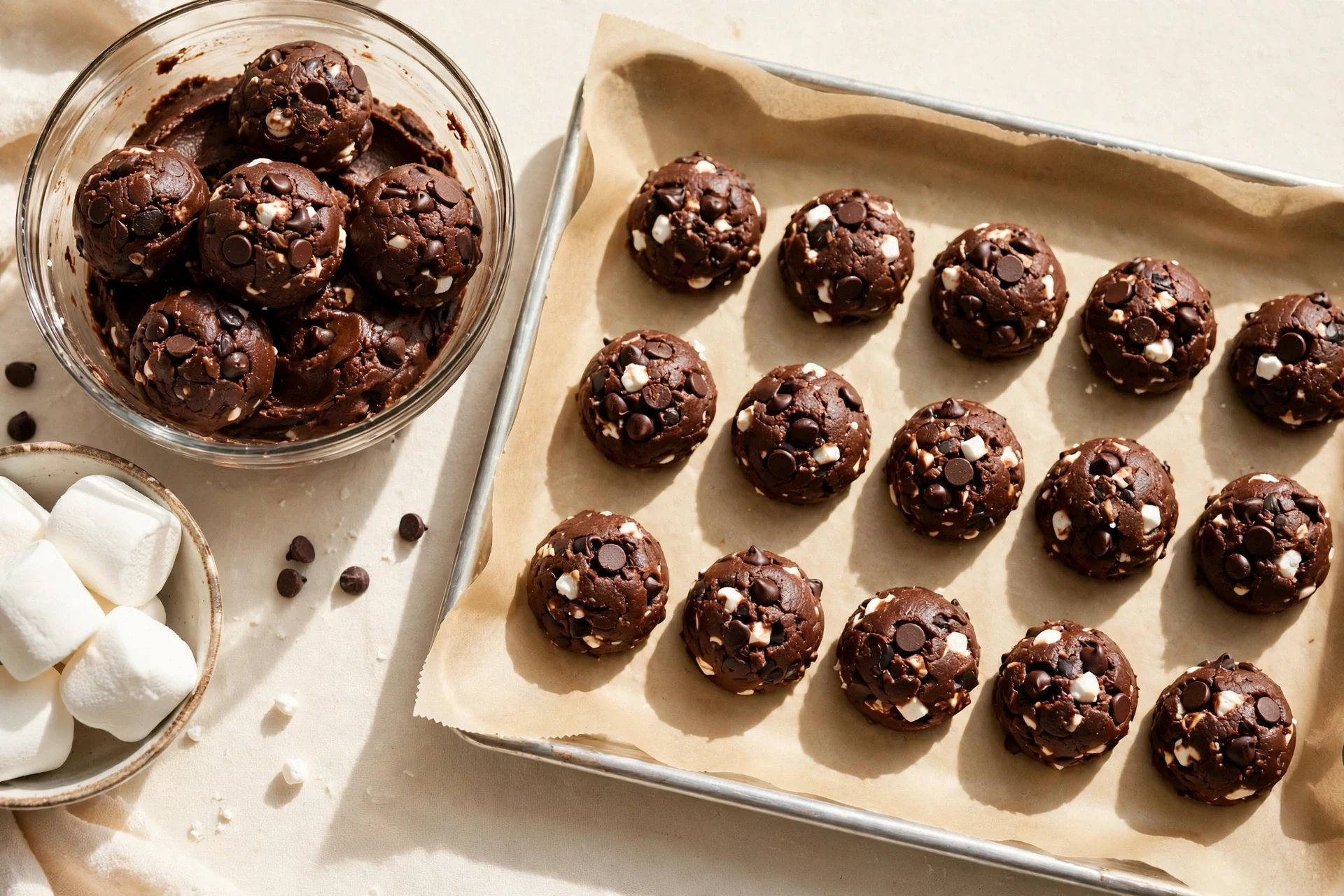
- Scoop the dough into 24 balls of about 2 tablespoons each, set 2 inches apart on the pans. Slightly flatten each ball with your palm; the chill keeps them thick, and a head start on the shape keeps the marshmallow centered later.
- Bake one pan at a time for 9 minutes, until the edges look set and the centers still look slightly soft.
- Working quickly, press one marshmallow half, cut side down, onto the center of each cookie. Return the pan to the oven for 2 minutes, until the marshmallows puff and slump.
- For toasted tops, broil 30 to 60 seconds, watching constantly and turning the pan once, until the marshmallows are golden in spots. Or rest the pan in the turned off oven, door closed, for 1 minute for glossy untorched tops.
- Cool on the pan for 10 minutes; the marshmallow sets as it cools and the cookies firm up. Move to a rack. Serve warm if you can, or refresh later for 8 to 10 seconds in the microwave.
Freeze the Dough, Bake on Demand
December rewards the baker who froze in November. Scoop the chilled dough into balls, freeze them solid on a tray, then bag them for up to two months. The marshmallow bits and chips freeze inside the dough without any change in behavior.
From frozen, the cookies bake at the same temperature with two minutes added before the marshmallow goes on. That small adjustment is the entire difference, and it means a tray of warm cookies is eleven minutes away at any point in the season.
Baked cookies keep three days in an airtight container at room temperature, but the toasted tops have one rule: they stick. Layer them with parchment between every layer, and never stack two marshmallow tops face to face.
For the cookie box itself, pack these within a day of baking for the prettiest tops, and put them on the top layer of the box, where nothing presses on the marshmallow. A ten second refresh in the microwave returns the goo before serving.
Flat Cookies and Pale Tops, Fixed
Flat cookies almost always trace back to heat: butter melted and used boiling hot, or dough scooped before its chill. The butter should be melted and then left five minutes; it should feel warm, not hot, when the sugars go in.
Pale, raw looking marshmallow tops mean the marshmallow went on too early or the oven runs cool. It should meet the cookie at nine minutes, not at five. A marshmallow that bakes the whole time melts into the crumb instead of sitting on it.
Bottoms that darken too fast usually mean a dark, thin sheet pan. Line it with parchment, as written, and move the rack to the center of the oven. Dark pans can also drop the bake by one minute with no other change.
Cracked tops, on the other hand, are a charm, not a defect. The surface sets while the center is still rising, and the fine cracks that open around the marshmallow are exactly the look of the mug’s foam breaking. Do not chase a smooth top here.
If the dough feels dry and crumbly at mixing, the flour was likely scooped from the bag and packed. Weighing is the permanent fix; for this batch, a tablespoon of milk stirred in at the end restores the soft, scoopable texture.
Peppermint, Orange and Double Marshmallow Variations
For a peppermint version, add half a teaspoon of peppermint extract with the vanilla and scatter crushed peppermint candy over the marshmallow the moment it leaves the broiler. The candy sets into the warm top and gives the box a red and white cookie.
Orange and chocolate are old friends: add the finely grated zest of one orange to the sugars before the butter goes in. The zest oils perfume the whole dough, and the cookies lean toward a chocolate orange truffle.
Double marshmallow means both systems doubled: a full cup of bits in the dough and a whole large marshmallow, not a half, on top. Press it slightly flatter at nine minutes so it covers the cookie like the foam on the drink.
For a mocha reading, whisk a teaspoon of instant espresso powder into the dry ingredients. It does not make the cookies taste like coffee; it makes the chocolate taste more like itself, a trick worth keeping for every cocoa dough.
However you dress them, keep the two marshmallow placements and the thirty minute chill. Those two moves are what make these hot chocolate cookies taste like the mug instead of merely borrowing its name.
Hot Chocolate Cookie Questions, Answered
Can I use mini marshmallows instead of freeze dried bits inside the dough?
You can, but expect them to melt away during baking and leave sweet, slightly sticky pockets rather than visible marshmallow. Freeze dried bits are dehydrated, so they soften without disappearing. If minis are all you have, freeze them for 30 minutes first and fold them in at the very end; they hold a little better.
What if my hot cocoa mix is unsweetened?
Add 2 extra tablespoons of granulated sugar to the dough. Sweetened mixes carry a large share of this recipe’s sugar, and an unsweetened mix leaves the cookies noticeably bitter. You can also skip the mix entirely and use 2 more tablespoons of cocoa powder plus the sugar adjustment, for a deeper, less milky flavor.
Why did my marshmallow topping slide off the cookie?
The cut side was probably facing up, or the cookie surface was still too soft. A halved marshmallow grips with its cut, sticky side down, and it should go on at 9 minutes, when the edges are set enough to hold it. Press it gently once, then do not move the pan until it comes out of the oven.
How do I pack hot chocolate cookies in a gift box without ruining the tops?
Cool them completely, then layer them in a single layer or with parchment between layers, marshmallow tops never touching another cookie. Pack them within 24 hours of baking and place them on the top layer of the box. A sheet of parchment directly over the tops before the lid keeps them presentable in transit.
Can I bake the dough balls straight from the freezer?
Yes. Freeze the scooped, chilled dough balls solid on a tray, then store them in a bag for up to 2 months. Bake from frozen at 350 degrees F, adding 2 minutes before the marshmallow step, so 11 minutes, then add the marshmallow half and finish exactly as written.